
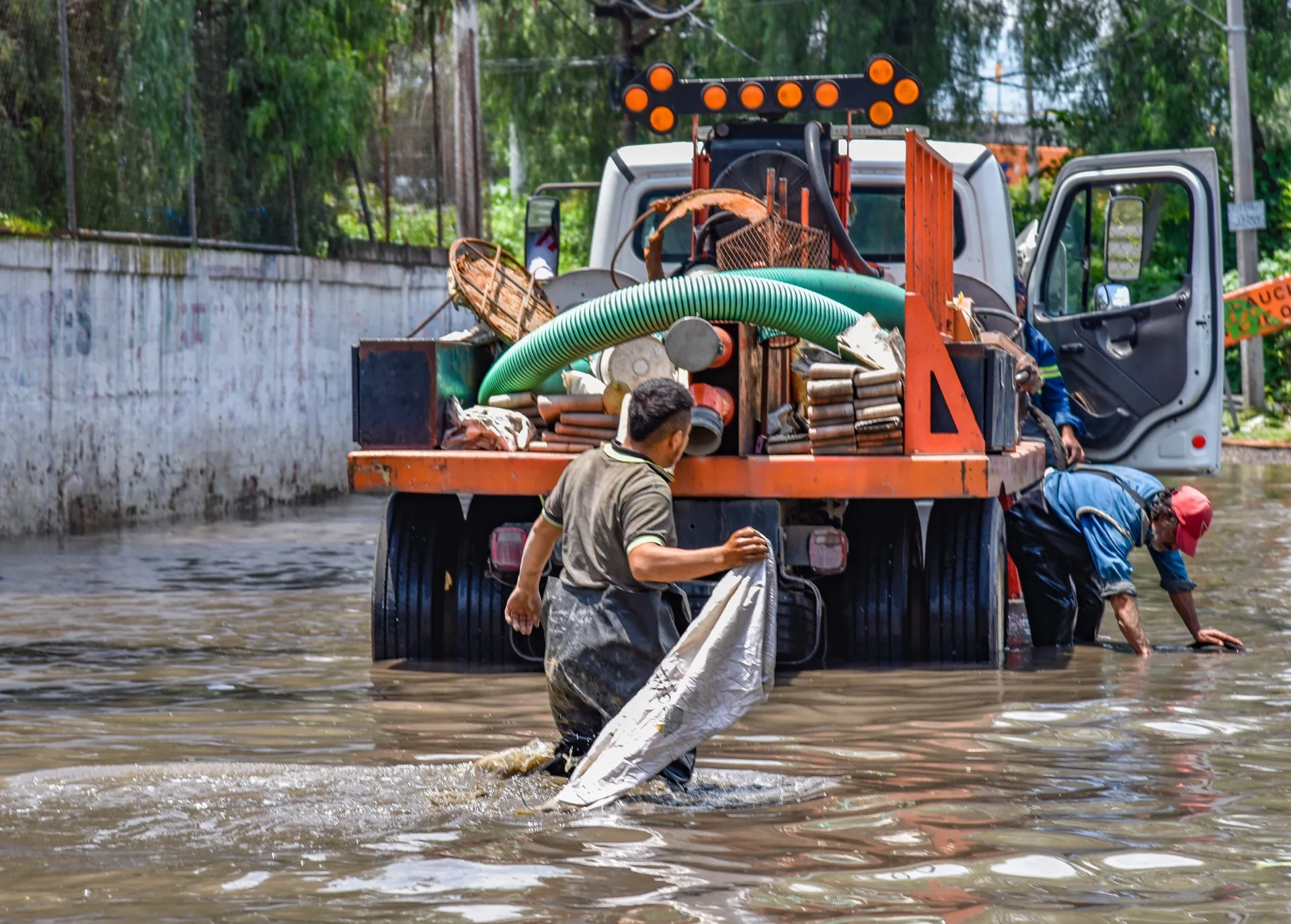
In towns that are growing quickly, the visible infrastructure comes first. A road is paved, a market is built, a school is opened. Drainage is treated as an accessory to those projects rather than as the system that determines whether they survive.
The catchment changes faster than the design
Urbanisation replaces infiltrating surfaces with impermeable ones. A catchment that generated a modest peak flow when it was farmland can generate several times that after a decade of construction. A culvert sized against historic conditions is undersized on the day the last roof goes on.
Blockage is a design condition, not a maintenance failure
Open channels in dense settlements collect solid waste. Designing for a clean channel and then blaming maintenance when it silts up is not engineering. Sizing with a realistic blockage allowance, providing access for cleaning, and locating trash racks where they can actually be emptied costs very little at design stage.
Outfalls decide everything upstream
A drainage network can only discharge as fast as its outfall allows. Where the receiving water backs up during storms, upstream capacity is theoretical. The outfall condition, including tidal or river levels, should be the first thing established and the last thing compromised.
Build the maintenance model with the hydraulic model
A network that requires an unfunded cleaning crew is a network that will fail. Where we design urban drainage we set out the cleaning frequency, the equipment needed and the annual cost alongside the capital estimate, so that the authority approving the scheme is approving the whole cost of it.